Off to Work

by the First ResidentsBS3 Heritage Group for Futures Past
Rapid industrialization in the second half of the 19th Century had persuaded people to b the first residents of this area. By the early twenties, those from our streets were engaged in ‘traditional’ work associated with the city, as well as a variety of new and emerging industries. Bristol’s nautical and maritime links were a continuing source of work.
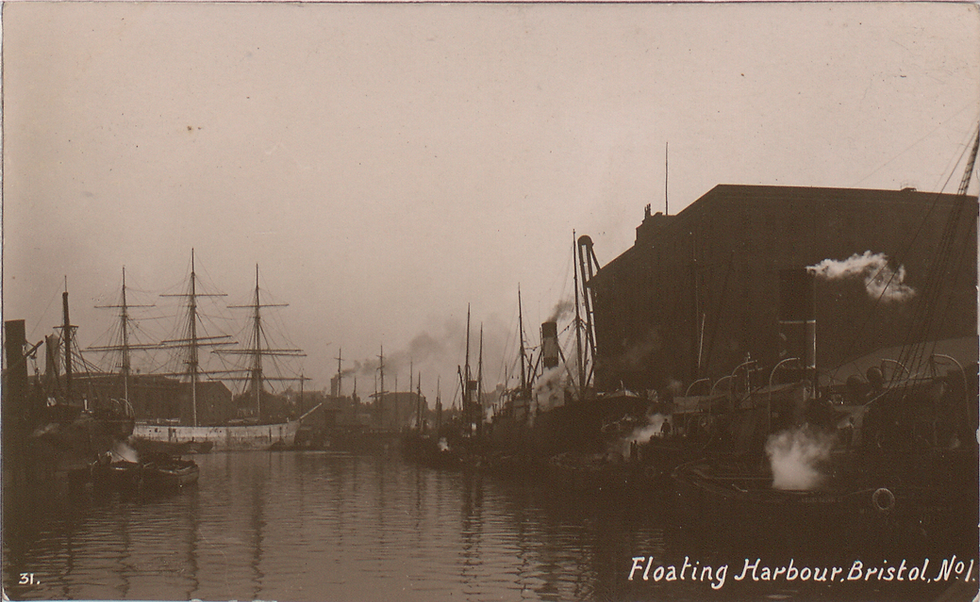
A dockyard labourer lived at number 6 on Stafford Street, a shipyard labourer at 32, next door to a ship’s rigger at 33. Goods to and from the inner city docks needed transportation. Men worked for haulage companies, probably horse drawn, one associated with nearby Parker Bros. Tanners on Whitehouse Street, another for Western Eastons Agricultural Company based at Redcliffe Backs.
The opening of the main Wills Tobacco Factory on Bedminster Parade in 1886 had created a range of work for both men and women. Having started as a factory for handmade cigar making and tobacco products, by the middle of the twenties, mechanisation had taken over. Cigarettes with such names as Woodbines and Embassy became popular.

At 32 Stafford Street, three daughters in the family were working in the cigarette factory and there are sons and daughters in Little Paradise numbers 6, 11 and 18 with other roles. But work opportunities for women came with special contractual conditions - “She shall not contract Matrimony within the said Term, nor play at Card or Dice Tables, or any other unlawful Games”.
Heavy industry on the doorstep, like the Essex Ironworks just off East St and the Capper Pass Iron Smelting Works (then on the site of the new Metalworks Student development on Dalby Avenue) also offered work. The Perry Family’s father at number 10 Little Paradise was employed at Capper Pass, whilst at number 41 Stafford St, a resident worked for a local company making metal boot protectors for those heavy industry employees. Another traditional Bristol based product was chocolate making. At number 9 on Stafford Street each morning, a chocolate mixer would set off for the ‘in town’ JS Fry and Sons factory. However, by the middle of the twenties he’d face the longer journey to Keynsham, when the factory expanded and moved.
Finally let’s acknowledge a shorter walk to work. At the start of the twenties, on most days from 3 Leicester Street, Joseph Phillips, left his home to labour in the most historic workplace in the area. He was a miller, just around the corner in Mill Lane. However, technology was about to catch up with him and that building before the decade was finished.


