St John’s Church - Bedminster

by the First ResidentsBS3 Heritage Group for Futures Past
The largest building to greet the newcomers to this expanding part of Bedminster was St John’s Church. In 1829, as residents arrived in Little Paradise, the Church was clearly visible across a small undeveloped field. Unfortunately, the building was experiencing a rather less than positive period in a lengthy and significant history.
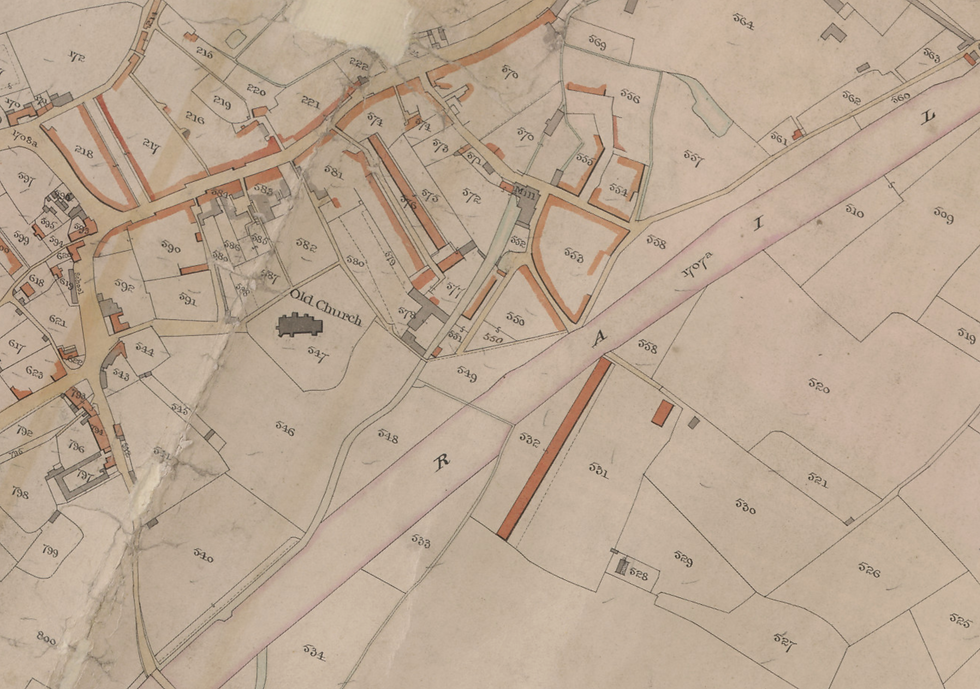
The record starts in the Domesday Book of 1087. One priest is listed among the inhabitants of Bedminster, conducting Christian services from the ancient church of St John’s. This first 11th century Bedminster church had much to recommend it. It had status! St John’s became the mother church of St Mary Redcliffe and retained its unlikely ‘seniority’ even when Queen Elizabeth 1st on a visit to Bristol, allegedly described the junior partner as the ‘fairest, goodliest and most famous parish church in England’.
The original St John’s Church building survived until the mid 1600’s when it was replaced by a new church. However, in the 19th century as Bedminster underwent the change from rural to industrial, St John’s was by then in a neglected and dilapidated state.
A local columnist of the day, Joseph Leach thought he knew where the blame lay - the incumbent priest the Rev Martin Whish, and Sir John Smyth of Ashton Court. He railed against the priest, “ Are the two sermons you pull out of your pocket on Sunday sufficient for the other six we never see you – never hear your voice and never have the benefit of your counsel?’

And Sir John was not spared his ire either, “ Don’t shrug
your shoulders Sir John: I say you ought to do it. You are a churchman, and a rich man, you derive large rents from the parish and you are Lord of the Manor.’

Meanwhile, parish records also provided a poignant reflection
of living conditions then in this part of Bedminster. From 1813 to 1832 around 900 burials were conducted at the church, half of which were children. On the death of Martin Whish, the new incumbent George Henry Eland set about rebuilding St John’s Church. The third building on this site, to be known as St John the Baptist’s Church at the end of the 19th century, coincided with the residential expansion of our area and was consecrated in 1855.
The ultimate fate of the Church echoes the fate of our three streets in the twentieth century. St John’s Church fell victim to the Luftwaffe’s bombing raids during 1941 which left a smouldering shell in its wake. Despite a campaign to rebuild the Church, after the war, the case was lost. What Hitler had failed to destroy, the bulldozers demolished in 1967.
For today’s ‘pilgrims’ a green memorial area, St John’s Churchyard, hidden behind buildings at the western end of East Street, is all that is left to remind us that a church once stood dominant on this site for around nine hundred years or more, serving as a place of worship for communities, including our first residents.


